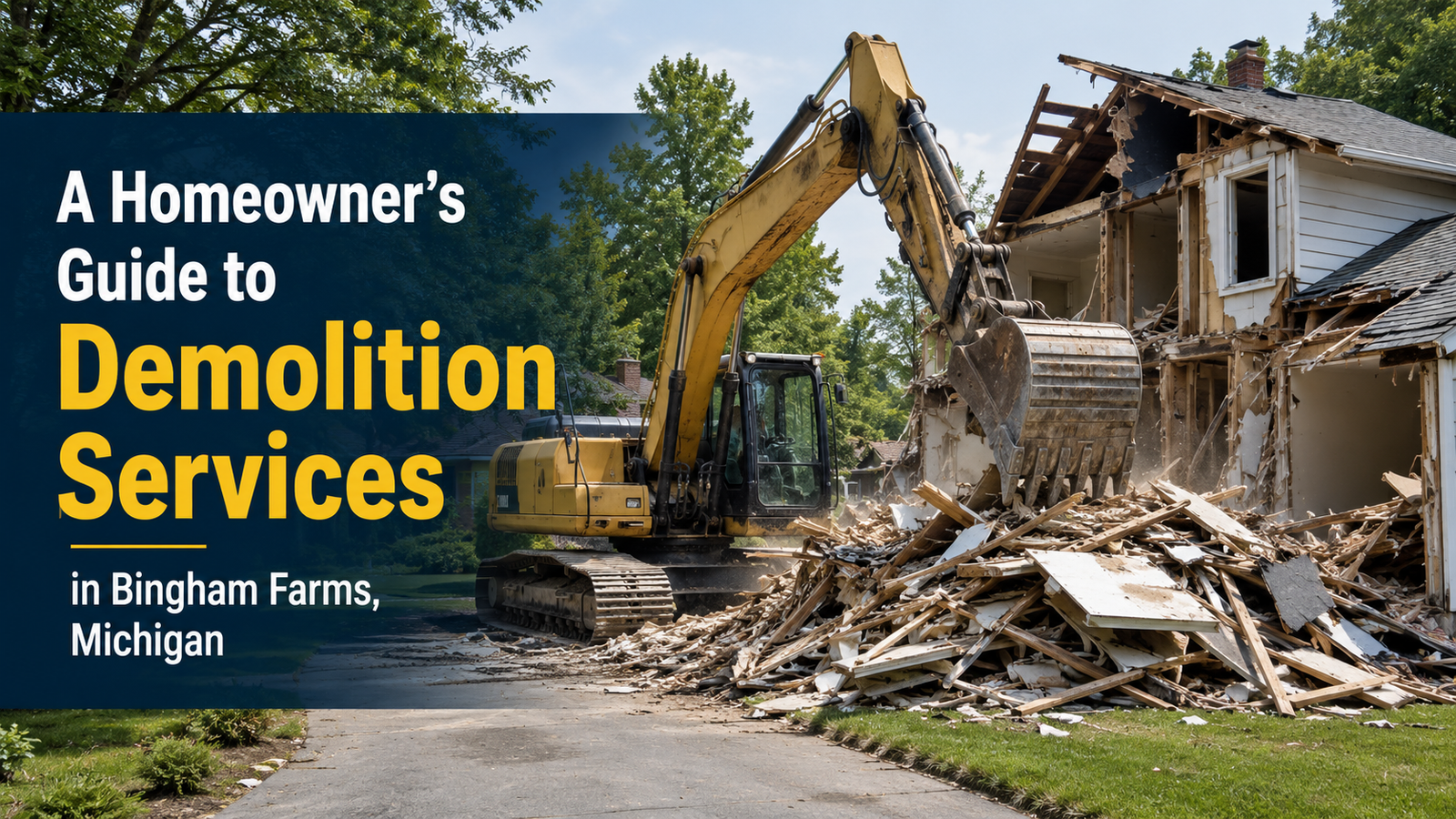
Bingham Farms is one of Oakland County’s smaller, more wooded communities, known for larger residential lots, mature trees, and a quieter setting than its more densely built neighbors. Because many homes in the village sit on generously sized parcels with significant landscaping, Demolition Contractor Bingham Farms projects here often require a different level of planning than a typical urban teardown. Whether the project involves removing an aging home, an unused outbuilding, or preparing a lot for new construction, understanding how demolition works can help property owners set realistic expectations.
What Falls Under Demolition Work
Demolition is a broad term that covers everything from tearing down an entire house to removing a single structure on a larger property. In Bingham Farms, common projects include full residential teardowns ahead of new custom home construction, removal of detached garages or barns on larger estate lots, and clearing old pool structures, sheds, or guest houses that are no longer in use. Interior demolition, where select rooms or additions are removed as part of a larger renovation, is also common in a community where many homeowners choose to update rather than relocate.
Site Assessment and Planning
Because Bingham Farms properties often include significant landscaping, mature trees, and private wells or septic systems in some areas, a thorough site assessment is an essential first step. Contractors typically evaluate the layout of the lot, identify any trees or landscaping features that need protection, and map out equipment access given that many driveways in the area are long and winding rather than street-adjacent. This upfront planning helps avoid unnecessary damage to the surrounding property during the teardown itself.
Permitting and Utility Disconnection
As with any demolition project in Oakland County, a demolition permit is generally required before work begins, along with confirmation that gas, electric, and water utilities have been properly disconnected and capped. For properties with private wells or septic systems, additional coordination with the appropriate county health department may be necessary to ensure those systems are handled correctly during and after demolition.
Hazardous Material Considerations
Older homes in Bingham Farms, particularly those built several decades ago, may contain materials such as asbestos insulation, flooring adhesives, or older forms of siding that require special handling. A pre-demolition survey helps identify whether these materials are present so they can be properly abated by licensed specialists before any mechanical demolition takes place. This step protects both the demolition crew and the surrounding environment.
The Physical Demolition Process
Once the site is prepared, permits are secured, and any hazardous materials have been addressed, the actual demolition can proceed. Depending on the structure and the goals of the project, this might involve mechanical demolition using heavy equipment for a full teardown, or a more selective deconstruction approach when certain materials, fixtures, or architectural elements are being preserved or salvaged. Debris is separated on-site into categories such as wood, metal, concrete, and general waste to streamline recycling and disposal.
Protecting Trees and Landscaping
Given how much of Bingham Farms’ character comes from its mature tree canopy and landscaped grounds, protecting these features during demolition is often a top priority for property owners. Contractors commonly use protective fencing around trees, plan equipment routes carefully, and take extra precautions with root systems to avoid long-term damage. This kind of careful planning is one of the reasons a site walk-through before demolition begins is so valuable.
Site Cleanup and Grading
After the structure is removed and debris is hauled away, the final phase involves grading the lot so it is level and ready for the next step, whether that is new construction, landscaping, or simply maintaining the property until future plans are finalized. Proper grading also helps manage water drainage, which is an important consideration on wooded lots where natural runoff patterns can be more complex.
For lots that will remain vacant for a period before construction begins, some homeowners also choose to seed the graded area temporarily to control dust and erosion, which is a simple, low-cost step that helps keep the property tidy in the interim.
Factors That Affect Timeline and Complexity
Several factors influence how long a demolition project in Bingham Farms will take, including the size of the structure, whether hazardous materials are present, how accessible the lot is for equipment, and the current permitting timeline with local authorities. Seasonal weather also plays a role, as Michigan winters can affect ground conditions and equipment scheduling.
Signs a Structure May Need Demolition Rather Than Repair
Determining whether an older home in Bingham Farms should be renovated or demolished often comes down to a few key structural indicators. Significant foundation settling, extensive water intrusion that has affected framing, long-term pest damage, or a roof structure that has failed in multiple areas are all signs that repair costs may exceed what makes practical sense compared to a full teardown. On larger, wooded lots, drainage issues around the foundation are also worth evaluating closely, since prolonged moisture exposure can accelerate structural deterioration in ways that are not always visible from the surface.
A qualified inspection is the most reliable way to make this determination, since some issues that appear serious on the surface are actually straightforward to repair, while others that seem minor can point to more significant underlying problems.
Mechanical Demolition vs. Selective Deconstruction
Not every demolition project calls for the same approach. Mechanical demolition, which uses excavators or similar heavy equipment to bring a structure down quickly, is generally the most efficient option for a full teardown where nothing needs to be preserved. Selective deconstruction, on the other hand, involves removing a structure more methodically, often by hand or with smaller equipment, so that specific materials, fixtures, or architectural details can be salvaged before the rest of the building comes down. In Bingham Farms, where some homes include custom millwork, stone features, or higher-end finishes, selective deconstruction is sometimes chosen even for a full teardown simply to preserve materials that would be costly or impossible to replicate in new construction.
How Michigan Seasons Affect Scheduling
Seasonal weather plays a meaningful role in how demolition projects are scheduled in Southeast Michigan. Frozen or saturated ground during winter and early spring can make excavation, grading, and equipment access more difficult, particularly on the kind of wooded, less-paved lots common in Bingham Farms. Many property owners prefer to schedule larger demolition projects for late spring through early fall, when ground conditions are more predictable and equipment can move around the property with less risk of getting stuck or causing unnecessary damage to the landscape.
Equipment Access on Estate-Style Lots
One detail that often surprises first-time demolition clients in Bingham Farms is how much planning goes into simply getting equipment to the structure. Long, curved driveways, gated entries, and dense landscaping can all affect which type of equipment a contractor brings to the site and how it maneuvers once there. In some cases, a contractor may need to bring in smaller equipment for the initial approach before switching to larger machinery once it reaches a clear staging area near the structure itself. Discussing access during the initial site walk-through helps avoid surprises once the work is scheduled.
Coordinating With Neighbors on Larger Lots
Even though homes in Bingham Farms tend to sit farther apart than in denser suburbs, noise and dust from demolition can still travel, particularly on quieter, wooded streets where sound carries further than expected. Letting neighbors know the general timeframe of the project, even informally, tends to reduce complaints and helps everyone plan around the temporary disruption. This is especially relevant for properties near shared private roads, which are common in parts of the village.
Frequently Asked Questions
Do I need a permit for demolition in Bingham Farms? Yes, a demolition permit is generally required before structural work begins, along with documentation that utilities have been disconnected.
How are large trees protected during demolition? Contractors typically install protective barriers around root zones and plan equipment routes to minimize disruption to mature landscaping.
What happens if my home has a private well or septic system? These systems require coordination with the local health department to ensure they are properly addressed as part of the demolition plan.
Can only part of a home be demolished? Yes, partial demolition is common for renovations that involve removing an addition, a section of the home, or specific interior spaces.
How is demolition debris disposed of? Materials are typically sorted on-site, with concrete, metal, and wood recycled where possible and the remainder taken to an approved disposal facility.
Does a long or private driveway affect the demolition process? It can, since equipment access and staging need to be planned around the layout of the property, which is why a site walk-through is recommended before scheduling.
What should I do about landscaping features I want to keep? Flag them clearly and discuss protective barriers with the contractor during the site assessment, since equipment routes are typically planned around features the homeowner intends to preserve.
Is Bingham Farms subject to the same permitting authority as neighboring communities? Permitting is handled at the local level, so requirements can differ slightly from nearby cities like Southfield or Birmingham, which is why it helps to confirm current requirements directly with the village before finalizing project plans.
For residents comparing options, demolition contractor services in Bingham Farms are worth researching thoroughly given the wooded, low-density character of the community and the care that larger estate lots require during teardown work.